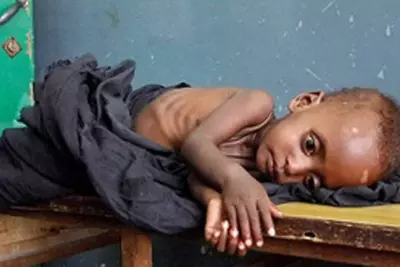
Malnutrition as a Leadership Challenge
Malnutrition persists in Ghana not because solutions are unknown, but because leadership has not consistently elevated nutrition as a national priority. Despite the availability of evidence-based interventions, malnutrition remains under-addressed in policy implementation and financing decisions. This gap reflects a broader leadership challenge that must be urgently addressed. Nutrition outcomes are shaped by decisions across…
Malnutrition persists in Ghana not because solutions are unknown, but because leadership has not consistently elevated nutrition as a national priority. Despite the availability of evidence-based interventions, malnutrition remains under-addressed in policy implementation and financing decisions. This gap reflects a broader leadership challenge that must be urgently addressed.
Nutrition outcomes are shaped by decisions across multiple sectors: health, agriculture, education, sanitation, and social protection. Without strong political leadership to coordinate these sectors, efforts remain fragmented and impact is limited. Policies exist, but implementation is often weak due to competing priorities and insufficient accountability.
High-level leadership is essential to place nutrition at the center of development planning. This includes ensuring adequate budget allocations, setting measurable targets, and monitoring progress at the highest levels of government. Parliament has a critical role to play in holding institutions accountable for nutrition outcomes, just as it does for economic performance.
International experience is instructive. Countries that have significantly reduced malnutrition have done so through sustained political commitment, often led by heads of government or senior ministers. Nutrition was treated as a development accelerator rather than a welfare issue.
In Ghana, leadership for nutrition must be strengthened at both national and sub-national levels. District assemblies, in particular, are pivotal in translating policy into action, yet they often lack the authority or resources to prioritize nutrition effectively.
Malnutrition undermines human capital development and constrains economic growth. Leaders must recognize that failing to address it carries long-term costs for the nation. Political leadership that champions nutrition will not only save lives but also strengthen Ghana’s development trajectory.
Ending malnutrition is achievable, but only if leaders take ownership of the challenge. Nutrition must be seen not as a sectoral concern but as a national development priority that demands decisive and sustained leadership.
Key Policy Recommendations: The Office of the President should establish a High-Level Nutrition Coordination Council, chaired by the Vice President, bringing together Ministers from Health, Agriculture, Education, Gender, and Local Government to meet quarterly and drive cross-sectoral action. The Ministry of Finance must mandate that at least 5% of each sector ministry’s budget includes nutrition-sensitive interventions with measurable targets. Parliament should create a bi-partisan Nutrition Caucus to champion nutrition legislation and hold the Executive accountable through annual review sessions. District Chief Executives (DCEs) should be given performance contracts that include nutrition outcome indicators, with nutrition coordinators appointed at all 261 district assemblies. The National Development Planning Commission (NDPC) must integrate nutrition targets into the next Medium-Term Development Plan with clear accountability frameworks linking national commitments to district-level delivery.
Feature article by Women, Media and Change under its Nourish Ghana: Advocating for Increased Leadership to Combat Malnutrition project