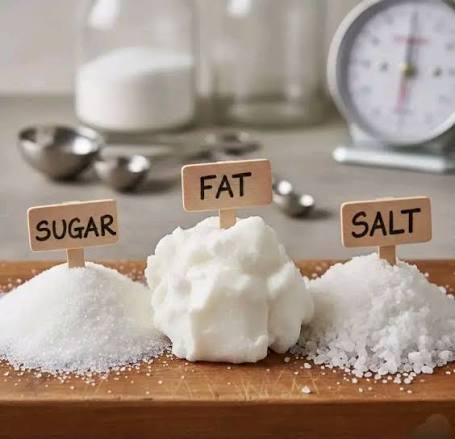
Salt, Sugar and Oil: The Three Ingredients We Need to Watch
Salt, sugar and cooking oil are ordinary parts of many Ghanaian diets. None needs to be treated as an enemy. The concern arises when they are consumed in excessive amounts, often without us realising how much we are actually eating.
The key is not necessarily to eliminate them, but to understand how much we consume, how often we consume them and where they appear in our diets.
Salt contains sodium, an essential nutrient that the body needs. However, consuming too much sodium can raise blood pressure and increase the risk of cardiovascular disease. The World Health Organization recommends that adults consume less than 2,000 mg of sodium per day, equivalent to less than 5 grams of salt.
Much of the sodium in our diets may come not only from the salt shaker but also from processed and packaged foods, seasoning products, condiments and heavily salted meals.
One simple step is to taste food before automatically adding extra salt. Using herbs, spices, onions, garlic, ginger, peppers and other flavourful ingredients can help meals remain enjoyable without relying entirely on salt.
For people who regularly use packaged seasoning products, checking the label where one is available can also help identify products that contain higher amounts of sodium.
Sugar presents a different but related challenge. Sugary drinks, sweetened tea, confectionery and many processed foods can add substantial amounts of free sugar to the diet.
Drinks deserve particular attention because they can be consumed quickly and may contain considerable amounts of sugar without creating the same feeling of fullness as a meal.
Water is therefore one of the simplest alternatives. Unsweetened drinks can also help people reduce their intake of added sugar. WHO recommends limiting free sugars to less than 10% of total daily energy intake, with further benefits when intake is reduced to below 5%.
This does not mean that every sweet food has to disappear from the household. It means paying attention to frequency, portion size and everyday habits.
The body needs dietary fat. Fats provide energy and help the body absorb certain vitamins. However, fats are energy-dense, meaning that relatively small amounts contain substantial amounts of energy.
Deep-fried foods can therefore contribute significantly to overall energy intake, particularly when eaten frequently. Fried foods do not automatically become “bad” foods, but frequency, portion size and cooking methods matter.
A useful strategy is moderation. A household does not necessarily need to stop using cooking oil; it can simply avoid using more than necessary and vary cooking methods where practical.
For families, small changes can add up. Using less salt when cooking, reducing added sugar in drinks, choosing water more often and limiting frequent deep-fried meals are practical steps that do not require an expensive diet.
Nutrition is rarely about one ingredient ruining a meal. It is about patterns.
A little salt, sugar or oil does not define whether a person’s diet is healthy. The bigger questions are how much is consumed, how often it is consumed and what the rest of the diet looks like.