Breakfast Show Segment on Malnutrition and Media Engagement
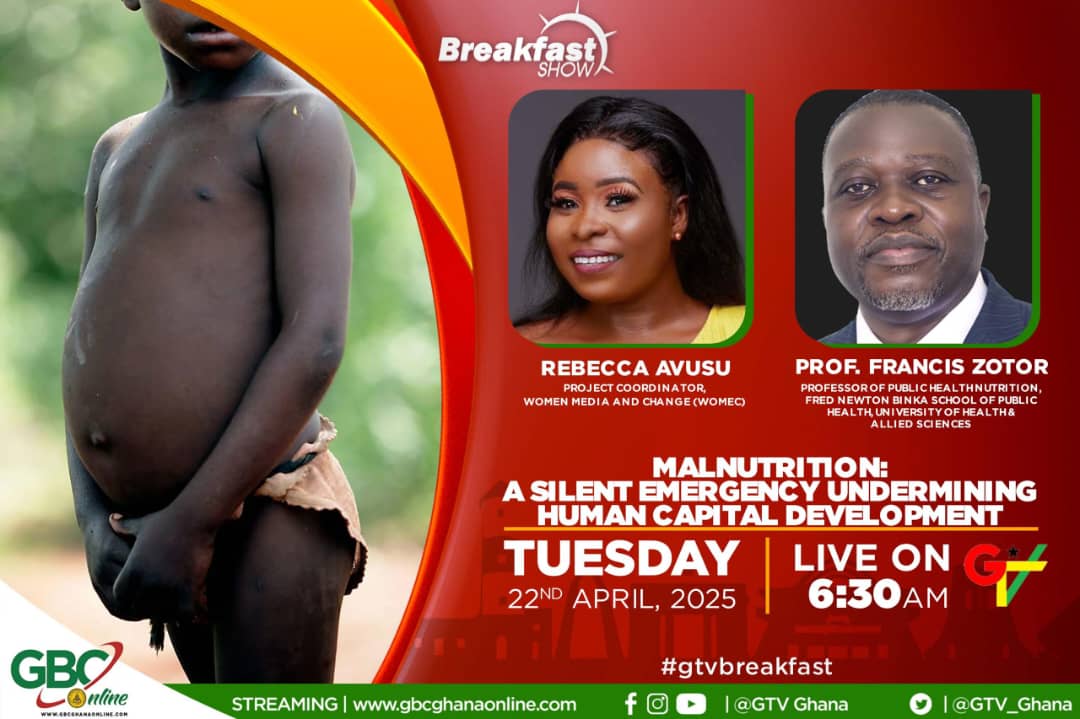
As part of activities under the Nourish Ghana Project, a media engagement segment was featured on the Breakfast Show on Ghana Television (GTV) to spotlight the critical issue of malnutrition in Ghana and the transformative role the media can play in addressing it.
Representing Women, Media and Change (WOMEC) on the program was Ms. Rebbeca Avusu, Ag. Project Coordinator for the Nourish Ghana initiative. She was joined by Prof. Francis B. Zotor, a distinguished nutrition expert, who provided valuable technical insights into the country’s current state of nutrition and health.
The discussion shed light on the dual burden of malnutrition: undernutrition remains prevalent in rural and disadvantaged communities, while overnutrition and related non-communicable diseases are on the rise in urban areas. Prof. Zotor emphasized that the problem is not just about food scarcity but also about food quality, awareness, and access to nutrition services.
Ms. Avusu highlighted WOMEC’s role in using media as a powerful tool for advocacy and education, encouraging journalists to take a more proactive stance in telling impactful nutrition stories. She underscored the need to go beyond event reporting and focus on consistent, human-centered storytelling that brings the realities of malnutrition into national consciousness.
The show also served as a platform to introduce the formation of a Nutrition Media Network, a key deliverable of the Nourish Ghana project. This initiative aims to bring together journalists and media professionals committed to using their platforms to promote better nutrition outcomes, advocate for policy change, and elevate community voices.
Through the Nourish Ghana Campaign, WOMEC seeks to bridge the gap between the media and public health by equipping journalists with the knowledge and resources to report meaningfully on nutrition. This Breakfast Show appearance was an essential step in that direction, amplifying the message and laying the groundwork for broader engagement.
The segment concluded with a call to action: for media professionals to become Nutrition Champions, using their voice and influence to educate the public, challenge harmful norms, and help create a well-nourished Ghana.